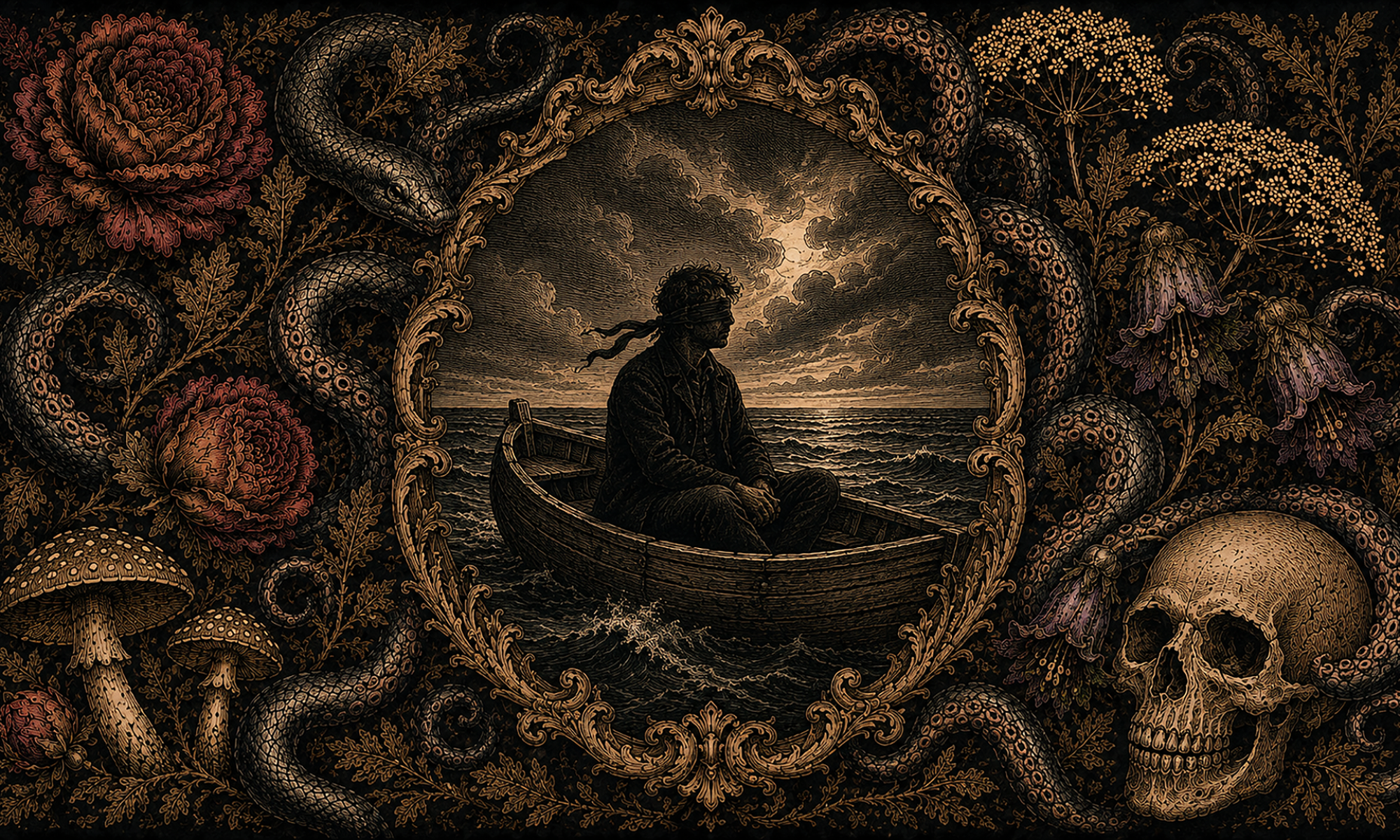
The Social Fracture of the New World
Humanity didn’t just survive, it divided, Scarcity, isolation, and the influence of Mother reshaped people into roles defined by necessity, environment, and ideology. These groups are not always fixed identities. Many drift between them, but each carries its own reputation, stigma, and power.
Big City Dwellers – “The Dependent”
These are the masses living in Central City Grove 0, the dense, vertical populations reliant on supply chains. They are forced to queue for water and food and trade constantly in small economies just to survive, however they are tenacious and adapt quickly to shifting conditions. Most have never seen the outer groves, their world is confined to concrete, neon, and ration lines, and for many, a dependence on the drug known as Cyberwolf.
Strength: Numbers and adaptability
Weakness: Total dependency
Bandits – “The Unbound”
“They don’t build. They take.”
Overview
Nomadic bandit gangs are one of the most immediate and human threats in the recovering world. Unlike the machines of the past, these dangers are familiar—desperate people shaped by collapse, scarcity, and fear. Typically numbering around 15 to 30 individuals, these groups move constantly, drifting between:
- Isolated groves and forest clearings
- The edges of the Untamed wilderness
- Ruins of pre-war cities and abandoned infrastructure
They establish temporary camps, never lingering long enough to be tracked easily, before moving on to raid, scavenge, or extort nearby settlements.
Composition & Culture
Most bandit gangs are not random collections of criminals—they are:
- Blended family units
- Survivors who banded together for protection
- Former farmers, traders, or refugees who turned to raiding as necessity hardened into habit
This gives them a complicated nature:
- Internally, they can be loyal and communal
- Externally, they are ruthless and predatory
- Children are sometimes present, raised within the gang and taught early that survival outweighs morality.
Mobility & Equipment
Nomadic gangs rely on speed and unpredictability.
Common Transport
- Hov-trucks – salvaged anti-grav cargo haulers, often unstable but invaluable
- Velobikes – fast, lightweight traversal vehicles used for scouting and hit-and-run tactics
They often travel in loose caravans, spreading out to avoid ambush but regrouping quickly when striking.
Tactics
Bandit gangs rarely engage in prolonged conflict. Their strength lies in overwhelming small targets quickly, striking at dawn or night and using surprise as a weapon.
Typical targets include small farms and isolated homesteads, trade convoys and poorly defended hamlets. Raids are fast and brutal, supplies are stripped resistance is crushed, survivors are sometimes left alive as a warning, or farms are burned.
Territory & Markings
Despite their mobility, many gangs maintain informal territories. They mark routes and claims using crude but widely recognized symbols:
- Red X: Claimed hunting ground / recent raid zone
- Yellow Circle: Safe passage (for the gang only) or regroup point
Variations and layered symbols can indicate danger levels or rival claims, these markings are often carved into trees, painted on ruins, or etched into metal.
Non-Nomadic Crews
Not all bandits wander.
Some groups establish permanent enclaves in hard-to-reach regions:
- Marshlands
- Mountain passes
- Deep Untamed zones
- Collapsed urban outskirts
These settlements are often heavily fortified with scavenged materials, sustained entirely through raiding rather than agriculture and known for brutality, slavery, or worse. They have been known to become long-term threats, festering wounds in the landscape.
Law & Response – Local Marshalls
Most bandit activity is handled by local Marshalls, who track movement patterns, defend settlements and organise small militias. However, when a gang becomes too large or entrenched the local syndicate is called in. Their response is decisive, targeted elimination of leadership, destruction of camps and supply lines, psychological warfare to scatter survivors. A Syndicate intervention often ends with the gang being completely erased, or driven into even darker regions.
Life Expectancy
Bandit life is short and violent, most members Do not survive more than a few years, they die in raids, reprisals, or internal conflict or burn out physically and mentally under constant stress. They live in a state of perpetual desperation, where every risk feels justified and every mistake is fatal.
Nomadic bandits represent
The human cost of collapse, the fragility of rebuilding society, the truth that even without machines… humanity can still be its own worst enemy, they are not just villains, they are what happens when survival comes before everything else and never stops.
Builders and Artisans – “The Makers”
Builders and Artisans occupy a unique and quietly powerful position within the fractured ecosystems of the Groves. More skilled than general workers, they are the creators of survival itself, designing and fabricating tools, weapons, transport methods, agricultural rigs, custom technologies, and even intricate body modifications that blur the line between biology and machinery. Their work sustains the population, and yet, paradoxically, it also makes them targets. Syndicates, factions, and power brokers constantly seek to claim the most talented among them, turning craftsmanship into currency and captivity alike.
Unlike the dense, suffocating dependence of Grove 0, many Builders and Artisans reject rigid structures of control. They adopt a more bohemian, semi-nomadic lifestyle, drifting outward through the Groves in search of space, inspiration, and autonomy. The further one travels from the centre, the more their influence becomes visible, not in authority, but in expression. Nowhere is this more evident than in Grove 30 known as The Summit.
Grove 30 stands as a living testament to their philosophy: a place where survival has evolved into artistry. Here, entire communities of Builders and Artisans have reclaimed and retrofitted pre-war structures, transforming decaying concrete shells into vibrant, bespoke environments. Buildings are layered with handcrafted facades, metalwork etched with personal signatures, glass panels tinted in shifting hues, exposed mechanics reimagined as decorative features. No two structures are alike. Streets wind organically rather than by design, filled with kinetic sculptures, suspended walkways, and improvised glass domed gardens fed by ingenious irrigation systems.
The Grove itself feels almost alien compared to the rest of the new world, less like a settlement, more like a continuously evolving artwork. Light is softer here, filtered through coloured materials; sound carries differently, shaped by design rather than decay. It is one of the few places where people don’t just survive, they create meaning. Their exports reflect both necessity and identity. From Grove 30 and similar artisan enclave’s flow:
- Custom-built tools and modular machinery designed for adaptability in unstable environments
- Precision weapons and defensive systems, often handcrafted and uniquely modified
- Augmentations and body modifications, ranging from functional prosthetics to aesthetic enhancements
- Retrofit transport systems, including hybrid hover vehicles capable of navigating ruined infrastructure
- Agricultural innovations, such as compact hydroponic rigs and soil regeneration kits
- Architectural components, including prefabricated facade systems and structural reinforcements
- Energy solutions, like micro-generators and reclaimed power systems
- Artisan-crafted trade goods, which hold cultural and symbolic value beyond mere utility
Because of this, Builders and Artisans are both indispensable and dangerous. They enable independence, and independence threatens control.
Some remain hidden within their communities, protected by distance and obscurity. Others travel, their names becoming mythic across districts. A single renowned artisan can shift the balance of power in an entire Grove. They are not just makers; they are the ones quietly reshaping the world.
Cartographers – “The Lost”
Now believed extinct, the cartographers once mapped the shifting terrain, safe routes, structural changes in the world, however they discovered that this is not what it seems, and that it can become too unstable. They noticed landscapes changed, entire areas vanished or became instantly overrun by the great Untamed forest, they found their maps became obsolete overnight, a greater force was moving against them in the shadows. Some say a few still exist, but none of them speak or share information. They map in secret, plotting out something far bigger than geography.
Creator note: The cartography guild was “erased” over several days, once they discovered and prepared to publicly share the Secret. Mother eradicated them and any memory of them.
Chop Shop Traders – “The Reclaimers”
They deal in parts mechanical, structural, and sometimes biological. They salvage wreckage, strip abandoned tech and rebuild body modifications from fragments. All shops specialise in vehicle reconstruction, cybernetic modification and Black-market augmentation.
Moral line: Flexible at best
Construction Workers – “The Sustainers”
They keep everything from collapsing, they are responsible for all structural repairs, reinforcement of grove infrastructure, and emergency rebuilding. In places like Neo-Pelagos, they work constantly keeping the superstructure of the Grove intact and functioning. Reality: Nothing is ever finished; everything constantly feels held together.
Death Cult Members – “The Devoted”
Followers of the Path of the Infinite, the Order of the Long Night is a death cult that emerged shortly after the end of the machine war with the Infinite Black. Their doctrine is simple, and deeply misguided.
These heavily tattooed zealots believe they were chosen by Mother to remain behind, tasked with preparing the surviving world for her return. They see themselves as heralds of an inevitable end, spreading a philosophy that glorifies death as a sacred passage. To them, entering the Infinite Black is not something to fear, it is something to embrace. They do not understand what truly awaits them.
The Leader — “Darkness”
At the centre of the Order is a figure known only as Darkness. Very little is known about her origins. She appeared without warning, already surrounded by followers, already speaking with absolute conviction. Those who have encountered her describe a presence that is both hypnotic and deeply unsettling, calm, deliberate, and utterly certain. Rumours persist that Darkness is not entirely human.
Some believe she is a Portal Witch left behind by Mother, a guide, or perhaps a remnant, placed in the world to prepare it for what comes next. Others claim she is simply unstable, a mind broken by exposure to the Infinite Black. But there are inconsistencies in these explanations. She seems to know things she should not, she speaks of events before they happen, and those who follow her rarely question anything she says. Whether prophet, survivor, or something far more dangerous… Darkness spreads a doctrine of death, submission, and inevitability.
Beliefs and Practices
The Order is driven by a singular desire: to be taken by Mother. They believe death is not an end, but an offering, that the Infinite Black is a divine destination, that submission is the only path to meaning, and that Mother’s return will bring “completion” to humanity. Their mantra is whispered often, softly and persistently: “See with her eyes.”
Appearance
Members of the Order are immediately recognisable. TDressed in long, black hooded ponchos, their bodies are covered in dense black tattoos, scripture, doctrine, repeated mantras, the whites of their eyes have been tattooed black creating a hollow, unnatural stare. Their appearance is striking, but it is their stillness, their quiet intensity, that is what unsettles most.
Behaviour
The Order is highly active across the Groves. They gather in Market squares, trade hubs, and high-traffic survivor zones. They offer pamphlets, speak in hushed tones, and attempt to recruit with persistent calm. A common opening question: “Will you offer yourself freely to the Black when the time comes?” They are especially drawn to grief, those who have lost loved ones to disappearance are often their primary targets.
Escalation and Threat
The Order is no longer passive. Several temples have been destroyed in unexplained explosions, hidden “suicide dens” have been uncovered, reports suggest distribution of poisoned Pabulum capsules. A more extreme belief is spreading within their ranks, that delivering others to the Infinite Black is an act of devotion. Whether this shift comes from internal radicalisation, or direct influence from Darkness is unknown.
Presence Across the Groves
The Order maintains a presence in most Groves, but is particularly active in coastal regions. Grove 3 has become a stronghold of influence. Within The Heap’s sprawling black-market bazaar, members move quietly among traders and travellers, observing, selecting, and recruiting. Thousands pass through each day, and the Order watches.
Summary
The Order of the Long Night is more than a cult, it is a growing ideology shaped by fear, grief, and something far more calculated. At its centre stands Darkness. Whether she is a prophet, a remnant of Mother, or a doorway into something worse… One truth remains, they are not waiting for the Infinite Black, they are helping it arrive.
Death Collectors
Community volunteers handling suicide victims. Countless millions were lost to the Infinite Black during Mother’s five-year assault on mankind. In the years since the attacks ceased, the suicide rate of survivors has risen to epidemic levels. During the war communities were left shattered, entire families were taken, while others were executed for resisting the machines. Survivors now struggle under the weight of grief and the torment of not knowing what became of loved ones who vanished in the night.
Suicide has become so commonplace that those who choose to end their lives simply paint a white letter “M” on their front door. There is no stigma, no need for explanation. The mark serves as a signal to the Death Collectors: someone inside has passed. Death Collectors are groups of community volunteers who recover and bury the dead, offering a final dignity to those whose hearts were broken beyond repair. It is believed the white “M” signifies that, even in peace, the deceased remains a victim of Mother.
The collectors are easily recognised by their uniforms, black ventilator masks to guard against the smell of the dead, heavy safety boots, and black overalls marked with a crudely spray-painted “M” across the back. It is a grim duty, but a necessary one. In small communities, the burden is shared, rotated among residents so that everyone plays a part in laying the lost to rest.
Drifters and Nomads – “The Unclaimed”
These are the people who belong nowhere, they move constantly between groves, across unstable terrain and through forgotten or unknown areas like the Untamed. Some are survivors, others are broken and many carry stories, few are believed. They are not bandits, just travellers, never in one place for too long, often exchanging day labour for food or shelter.
Drug Dealers – “The Distributors”
They control the flow of substances like Cyberwolf. They operate in shadows, mainly in Central City however they maintain networks across all groves, they often answer to syndicates, but there are plenty of rogues and middlemen out to make a quick profit. Dealers are both feared and relied upon.
Truth: They don’t create demand, they feed it.
Farmers – “The Life blood”
Farmers are the backbone of survival, though rarely respected as such. They operate in controlled zones like Grove 18 or inland reclamation sectors, managing, Hydroponic systems, they are the key producers of Pabulum the miracle food supplement capsule, fungal and algae-based food production and basic root vegetables. They are practical, quiet, and deeply territorial. Many distrust outsiders, especially syndicates, who often exploit their output, the nomadic bandits that have been known to raid farms, and the constant fear of machines, this is related to the occasional “escaped” syndicate created machine terrorising farmers.
Reality: Without them, the entire system collapses.
Perception: Weak, easy to control.
Gamblers – “The Faithless”
Gamblers are products of hopeless systems who gather in underground dens, market backrooms, and floating platforms. They wager information, currency, pabulum supplies, Cyberwolf, and sometimes their own bodies or futures.
Belief: Chance is the only freedom left
Marshals – “Rural Law”
Marshalls are remnants of structured authority. They protect rural groves, escort critical shipments, enforce laws of decency, meaning, they keep the peace and ensure everyone is working together and not behaving in a manner that detracts from day to day rural living, life in the outer groves is hard enough already without community bickering and ignorance. Often underfunded and outnumbered, they walk a line between justice and survival. Some are incorruptible, most are not. Marshalls are a single step in the judicial system, they police, they judge, they advise, and the enforce outcomes of community decisions, for example expulsion from the community of undesirables, they have ties with the syndicates who are an umbrella police force. If a task is too much for a Marshall, the syndicates settle matters, typically with lethal force.
Smugglers – “The Vein Runners”
Smugglers move what shouldn’t move, trafficking Illegal tech, contaminated or restricted resources, Cyberwolf, people or human parts, and components used in BODFABS. They use hidden routes broken canals, submerged tunnels, abandoned infrastructure, and a shared knowledge of certain paths through The Untamed. They often work outside of syndicates and can typically get you anything you need, from anywhere in the new world.
Relationship with syndicates: Complicated (Some work for them. Others constantly evade them.)
Syndicate Operatives – “The Hands of Power”
These are the enforcers and facilitators of syndicate control (Kuro, Guǐ, Ōkami, Shāyú).
They oversee production zones, control trade routes and enforce order through quiet violence. They are well-equipped, disciplined, and often augmented either chemically or technologically.
Truth: They don’t run the world. They maintain it.
Traders – “The Connectors”
Those who don’t occupy a physical business location traffic between Groves, they deal in water, food, scrap, drugs, information and access. Some are independent, others tied to syndicates. The best traders survive by neutrality.
Skill: Negotiation over violence
Danger: Knowing too much
Final Note
These social groups do not exist in isolation, they overlap, collide, and evolve. A single person might be a trader one month, a smuggler the next and a bandit by necessity. In this world, identity is not chosen, it is forced by circumstance.
 Dan Verkys